Three Years Later: Generative AI – From Experiments to Infrastructure
Almost exactly three years ago, I wrote about generative AI in this space for the first time. The entry point back then led—almost inevitably—via Nick Bostrom. Not because he was the most precise observer of current developments, but because he had already made the topic visible to a broader public in 2015 with Superintelligence.
Back then, much remained speculative. Bostrom’s scenarios hovered between philosophical warning and technoid futurology. What was missing was the concrete manifestation. No one knew how—or when—these abstract possibilities would actually inscribe themselves into everyday life. It wasn’t until 2022 that it began to show how quickly a theoretical possibility could become practical infrastructure.
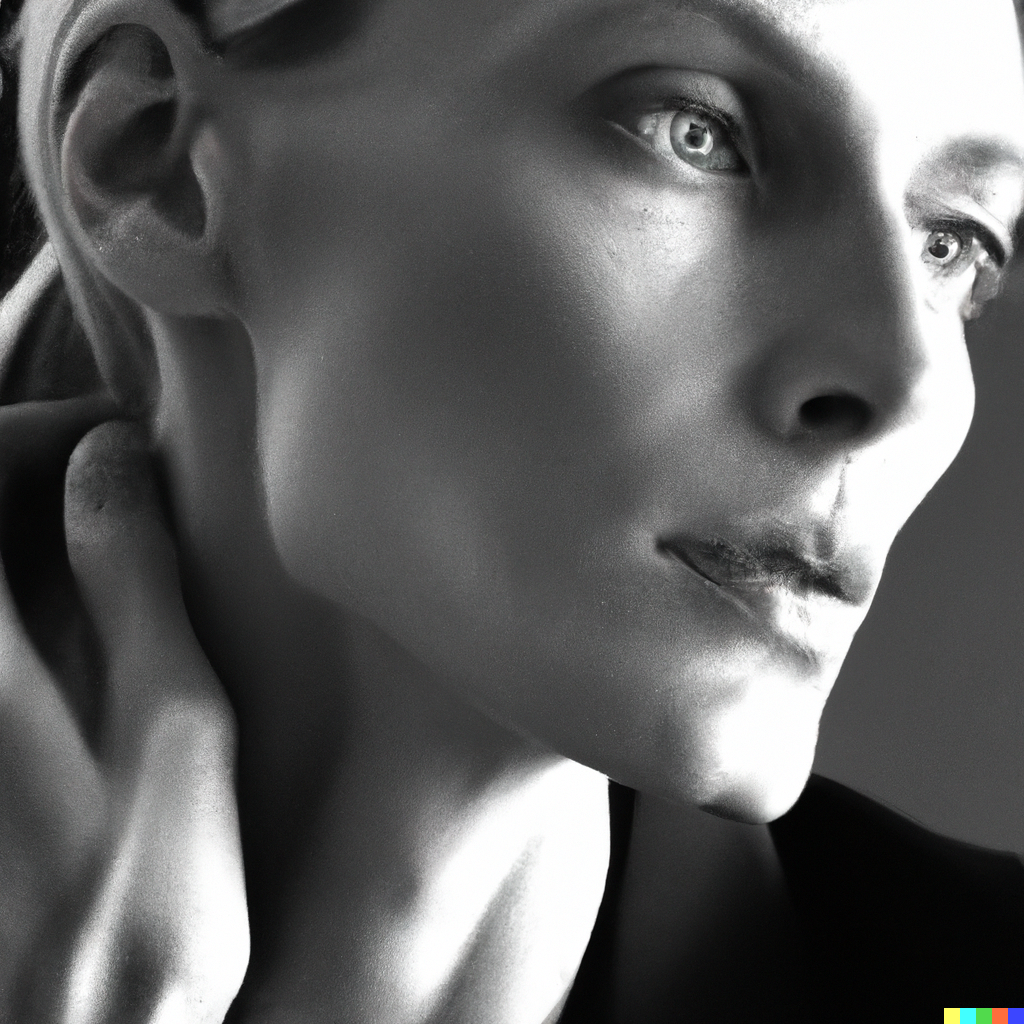
An early test with DALL-E in 2023.
The first large language models marked this moment. ChatGPT in its early form seemed simultaneously impressive and tentative: linguistically astonishingly fluent, practically often uncertain, with that mixture of precision and hallucination that was initially perceived more as a curiosity than as a serious tool. Parallel to this, the first widely accessible image generators appeared.
Their results were unmistakably synthetic. Hands with too many fingers, anatomically impossible bodies, strangely fused objects. Images that were more reminiscent of dream logs than photographs. Yet it was precisely in this imperfection that a peculiar fascination lay: you could watch the machine learning. Each iteration became visibly better, each new version pushed the boundary a bit further.
Shortly after came the first video-based models. Their sequences seemed like waking dreams—ghostly images that constantly transformed. Faces melted, architecture shifted during movement, bodies followed their own, highly inexplicable physics. These early video LLMs were less reminiscent of film and more of the visual equivalent of a half-sleep: coherent enough to be recognized, unstable enough to remain alien.
Perhaps the most revealing incident of this early maturation phase, however, was not a technical breakthrough, but a public failure: the Gemini debacle.

The Gemini debacle exposed the faultlines of alignment.
When the system first became more widely accessible, it became apparent how difficult it is to squeeze reality, memory, and normative expectations into an automated system. The AI responded to historical prompts with irritating corrections: female popes, ethnically diverse Wehrmacht units, Black Vikings, Asian founding fathers of the United States. Not as an artistic interpretation, but as a supposedly “balanced” representation of historical scenarios.
The reflex was obvious: the machine was not supposed to show what was, but what is considered appropriate from today’s perspective. The result was not progress, but a peculiar form of synthetic contemporary morality superimposed retrospectively onto history. Google later spoke of “unacceptable” results and temporarily pulled the feature. But the actual insight lay elsewhere: generative systems fail not only at technical limits, but at normative ones. While the early image generators stumbled over hands and anatomy, these systems stumbled over the present itself. They tried to correct historical reality before they could even depict it. The visual equivalent of a half-sleep here became the morally oversteered dream: coherent enough to be recognized, unstable enough to remain alien.
This episode marks a transition. The discussion shifted from Can the machine depict realistically? to Is it even allowed to? Every form of “alignment” not only prevents errors, it shapes reality.
Within two or three years, this picture has changed dramatically. What initially seemed like experimental playfulness has reached a maturity that can no longer be ignored. The visible fractures have largely disappeared. Hands are correct, light follows physical rules, movements seem plausible. Above all: the systems are no longer just tools for generating individual images or texts. They integrate themselves into real work processes—in design, communication, production—and are already replacing individual production steps there. Not only for cost reasons, but because of the speed advantage.
With this, the topic has now reached the mainstream—and, of course, politics, which is feverishly calling for regulation and new authorities. No longer as a distant question of the future, but as a concrete experience of the present. That these technologies will be disruptive is no longer a bold thesis, but consensus.
Looking back, the early examples seem almost harmless. The strange images, the dreaming videos, the flawed texts—they were harbingers of a development whose pace surprised even those who studied it intensively.
And even more: the new LLM models increasingly program themselves with exponentially growing efficiency. The stroke rate and developmental leaps seemingly increase by the day. What yesterday still seemed like an iterative experiment can demonstrate completely new capabilities within a few hours today.
Machines could soon act directly from thoughts. Ideas become real immediately—the classic distance between thinking and doing disappears. A rupture that radically alters our creation.
And yet there are still contemporaries who laugh at the number of fingers—metaphorically taking a photo of the freight train, standing on the tracks, unaware that it is an express train.